 EN
EN

NEWS
Smart Wearables: What Unresolved Challenges Lie Behind the Hundred-Billion-Dollar Market?
From smartwatches that track sleep data first thing in the morning, Bluetooth earbuds for music on commutes, to kids’ watches that safeguard children’s outdoor safety, a wide range of wearable devices have become ubiquitous in daily life.
IDC’s Q1 2026 global smart wearables statistics show that the global smart wearables market reached USD 91.6 billion in 2025, with wrist-worn device shipments hitting 872 million units for the full year. Domestic China shipments rose 11.4% year-on-year in 2025, outpacing the global average growth rate by a wide margin. The penetration rate of smart wearables equipped with local independent AI computing has climbed to 37.2%.
Nevertheless, Canalys’ 2026 Full Lifecycle Wearable User Survey reveals that alongside the expanding market scale, persistent flaws in product experience continue to erode user retention. The 12-month user retention rate for smart wearables fell 4.8% year-on-year. Breaking down user motivations for switching devices, 69.1% of consumers abandoned upgrades due to insufficient battery life. The battery life bottleneck has overtaken issues including limited functionality, outdated appearances and cumbersome interaction to become the primary driver of user churn and reluctance to purchase new devices.
This stark contradiction between the booming industry scale and prominent core user experience pain points has created structural hardware bottlenecks in complete devices, acting as a critical barrier preventing the industry from advancing from basic functional popularity to premium experience and medical-grade monitoring.
This report dissects the industry development landscape, user demands, hardware pain points, implementable solutions and future trends layer by layer. It delivers complete, actionable professional decision-making references for wearable hardware product managers covering project initiation, structural stacking design, upstream supply chain selection and R&D risk mitigation.
I. Definition of Smart Wearables
Smart wearable devices are portable close-fitting smart hardware integrated with multi-dimensional sensor modules, low-power computing chips, wireless communication units and dedicated energy storage cells. They attach directly to the human body or clothing to operate around the clock, linking with smartphones or independently delivering intelligent services.
Based on Canalys Q1 2026 penetration data for segmented tracks, they are divided into six major product categories.
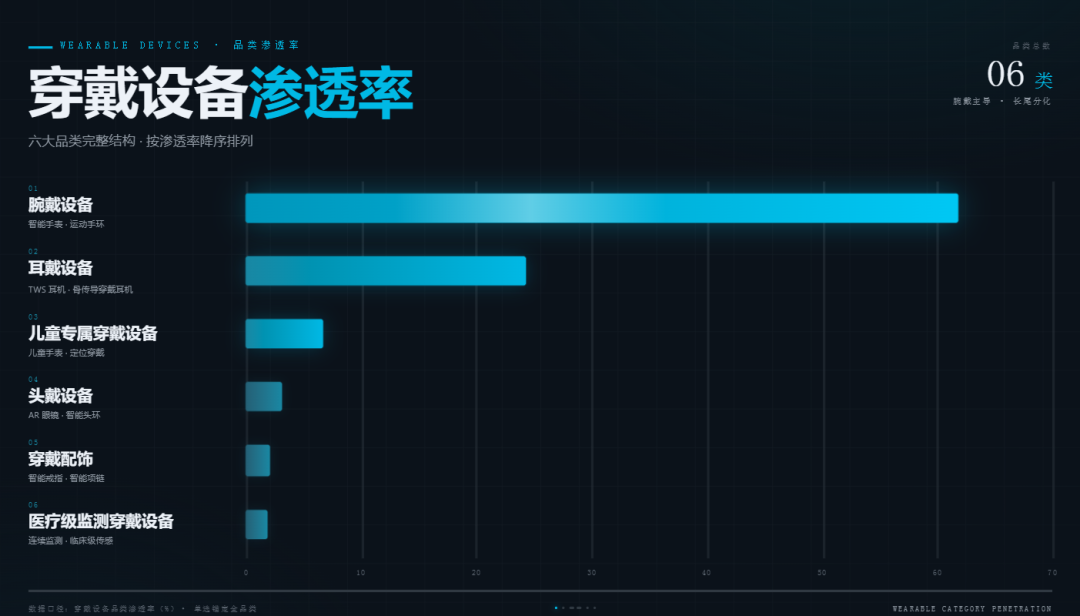
Distinct from traditional electronic products, modern smart wearables deliver value across four core dimensions:
- Real-Time Sensing: Built-in high-precision sensors continuously collect human and environmental data including heart rate, blood oxygen, sleep status and geographic location, serving as the human body’s "data nerve endings".
- Intelligent Interaction: Voice control and device linkage enable lightweight human-machine interaction.
- Scenario-Based Services: Adapted to diverse scenarios including sports, office work, home life, commuting, elderly care and child safety protection.
- Health Management: Evolved from basic data logging to risk early warning and physical status analysis, forming a key carrier for national public health management.
II. Smart Wearables Industry Analysis
(1) Explosive Industry Growth: Three Core Drivers Fuel the Hundred-Billion-Dollar Blue Ocean
Industry data shows China’s smart wearables market exceeded RMB 100 billion in 2025, releasing continuous track dividends jointly driven by three core engines: policy, technology and consumption.
- Policy Support: Medical Integration Expands Industry BoundariesWith the rollout of policies such as the 14th Five-Year Plan for Medical Equipment Industry Development, national authorities strongly encourage deep integration between wearable devices and medical systems. Wearable products once categorized solely as consumer electronics are transitioning toward medical-grade monitoring capabilities.
- Technological Breakthroughs: Hardware & AI Consolidate Product FoundationsIterations in chips, sensors, batteries and edge large models provide robust technical backing for the rapid development of smart wearables.
- Consumption Upgrade: Rising Health Awareness Broadens Market DemandIn the post-pandemic era, public health management consciousness has surged. Smart wearables combining sleek design and health monitoring functions have shifted from "optional gadgets" to "daily necessities".
(2) Market Competition Landscape: Four Leading Brands Dominate the Market
Competition intensifies across the hundred-billion-dollar track, with four core brands – Huawei, Xiaomi, Apple and Imoo – capturing the majority of China’s domestic market share.
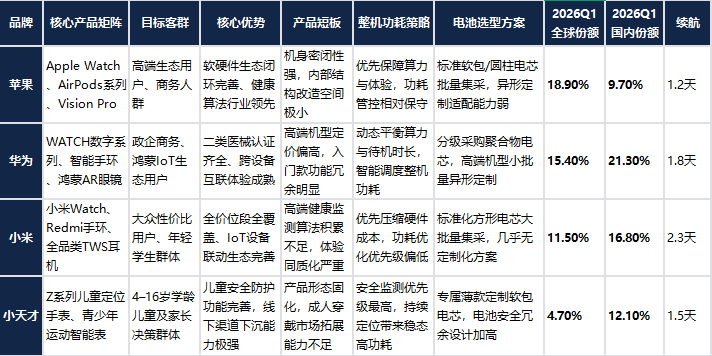
Data Source: Canalys Q1 2026 Full Wearable Device Battery Life Benchmark Report
(3) Classification of Mainstream Products
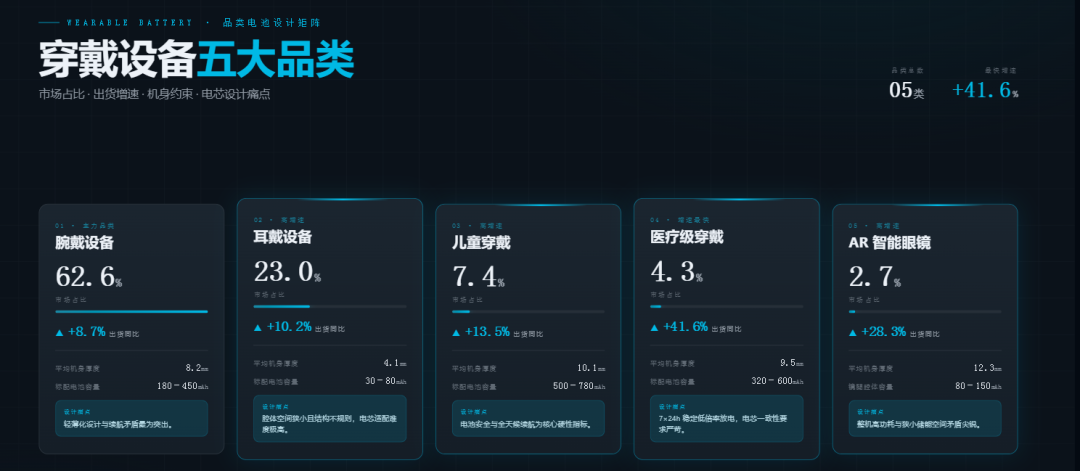
Core indicators for five major product categories are summarized based on Canalys Q1 2026 segmented shipment volumes and hardware structural parameters.
III. Precise User Positioning Framework
Beneath the vast market lies a massive consumer base with distinct demographic characteristics.
(1) User Profiles
Official third-party wearable user survey data indicates core consumers are concentrated in populous and economically developed provinces, predominantly male, aged 31–40.
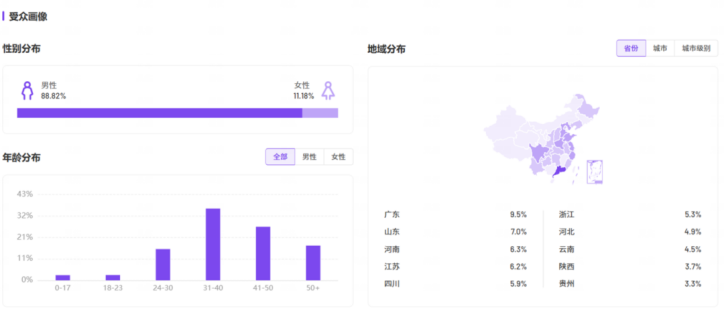
Data Source: Feigua Product Strategy Analytics
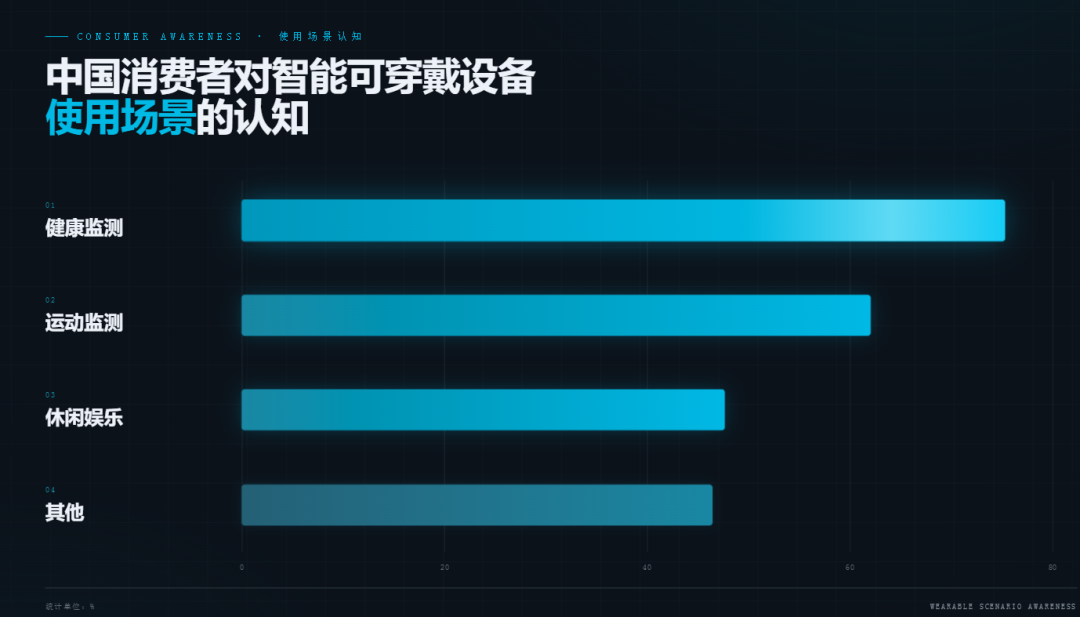
(2) Four Core Application Scenarios
Diverse smart wearable devices feature intelligent interactive functions to realize user information exchange, physical health monitoring, entertainment and other capabilities, covering all facets of daily life.
IV. User Pain Points & Corresponding Solutions
While the market expands rapidly and fulfills diverse user demands, the smart wearables industry faces multiple pain points hindering experience upgrades, grouped into four key categories below:
(1) Imperfect Software & Hardware Functions
End users widely report frequent deviations in core health metrics such as heart rate and blood oxygen, alongside excessive false alarms. Though devices boast abundant features, many lack practical value.
A deeper industry conflict exists: high-precision sensors and professional monitoring algorithms drastically raise the total BOM cost of finished products. Manufacturers must repeatedly balance hardware cost control, retail pricing and functional experience. Most mid-range models sacrifice monitoring precision by cutting sensor calibration expenses to keep prices affordable.
Optimization Solutions
- Hardware: Adopt tiered sensor deployment. Entry-level models retain three core monitoring modules (heart rate, blood oxygen, sleep) and remove low-frequency redundant sensors.
- Product Definition: Leverage big data user research to streamline seldom-used sports modes and enable user-customizable function toggles.
- Mass Production: Add unified full-device sensor calibration processes. Minor cost increases deliver notable improvements in health data accuracy, striking a balance between cost and user experience.
(2) Cumbersome Human-Machine Operation
Elderly users and young children alike complain about multi-layered device menus that complicate access to core functions including one-touch emergency calls, health data viewing and classroom lock modes, creating steep learning curves.
From an R&D perspective, mainstream manufacturers deploy a universal UI system for all age groups without separate interactive logic optimized for simplified senior operation or child anti-misoperation requirements.
SolutionsRetain a shared underlying system kernel while encapsulating two independent UI layers: a simplified senior mode and a child anti-misoperation mode. Pin core functions to the top menu and eliminate redundant third-level and deeper submenus. This adapts interaction experiences for all demographics without sharp R&D cost hikes, balancing development expenses and segmented user needs.
(3) Hidden Mass Production Pain Points in Underlying Hardware Structures
Intensified differentiated competition over product ID appearance has popularized curved, special-shaped and irregular chassis designs. Standard regular cells fail to match these unconventional bodies, while custom bent cells commonly suffer tab cracking, motherboard extrusion and internal structural interference – directly dragging down finished product mass production yields.
Additionally, most wearables support fast charging, yet compact chassis offer limited heat dissipation space. Excessive temperature rise during fast charging triggers automatic device frequency reduction, with less than 75% of units passing safety compliance tests on the first trial. This extends prototype trial production cycles and inflates mass production control costs.
SolutionsInvolve battery manufacturers in structural reviews during the early ID design phase to pre-match special-shaped cell solutions. Optimize cell tab layout and flexible packaging processes to boost structural stability of bent cells, lifting mass production yields for custom cells above 95%. Deploy low-temperature-rise specialized cell formulas and refine fast charging temperature control curves to raise compliance test pass rates without sacrificing charging efficiency, mitigating mass production risks.
(4) Battery Range Anxiety
Real-world user feedback confirms mainstream smart wearables generally require daily charging under regular use, with power draining halfway through outdoor sports – severely undermining core user experience.
Three root causes drive insufficient battery life in wearables:
Chip Level: Natural Mismatch Between High-Performance SoCs and Low-Power RequirementsFlagship wearables widely adopt advanced 6nm high-computing main controllers to support offline edge AI operations and parallel multi-channel sensor analysis. However, high-performance chips sustain high standby power draw – 42% higher than dedicated low-power wearable MCUs. Most manufacturers implement a single-chip full-operation architecture without splitting power consumption across main and co-processors. Even during screen-off standby, the main chip remains in frequent wake-up states, generating substantial idle static power loss. Furthermore, radio frequency communication modules continuously poll Bluetooth and cellular networks, accounting for 31% of daily device power consumption as an invisible major power drain.
Full-Device Power Consumption: Permanent Multi-Sensor Operation Plus Persistent Background LoadsTo guarantee monitoring precision, most smartwatches run heart rate, blood oxygen and other sensors nonstop by default. Sensor modules consume 55% of peak device power. Combined with background sleep tracking and real-time message push, devices never enter true deep sleep. Concurrent industry-wide lightweight design compresses heat dissipation space; minor chip heating accelerates electric leakage, creating a vicious cycle of heat generation → power leakage → shortened battery life.
Human-Machine Interaction: Undiscriminating Global Wake-Up Triggers Wasted PowerThe industry’s standard interaction logic activates screen wake on wrist lift, pop-up notifications and touch sensing without scenario-based tiered power management. Dual parallel optimization at the product full-device and battery cell levels, alongside software-hardware coordination, resolves battery life bottlenecks:

(A) Full-Device Product Optimization Schemes
- Tiered customization of interactions and functions to cut wasted powerEnable user-controllable function toggles, allowing users to disable rarely used sports modes and non-essential background monitoring as needed. Optimize passive interaction algorithms with dual filtering mechanisms (wear posture detection + hand motion prediction) to block invalid screen triggers from fabric friction or accidental wrist lifts, reducing redundant power consumption from interaction functions.
- Proactive structural design optimization to reasonably expand battery cavity volumeWithout altering product ID aesthetics or significantly increasing chassis thickness, streamline redundant motherboard components and reposition motors and receivers during structural design. This marginally frees internal cavity space to boost installable battery volume without compromising wear comfort, reserving structural room for battery life improvements.
(B) Mitac Micro Polymer Lithium Battery Solutions
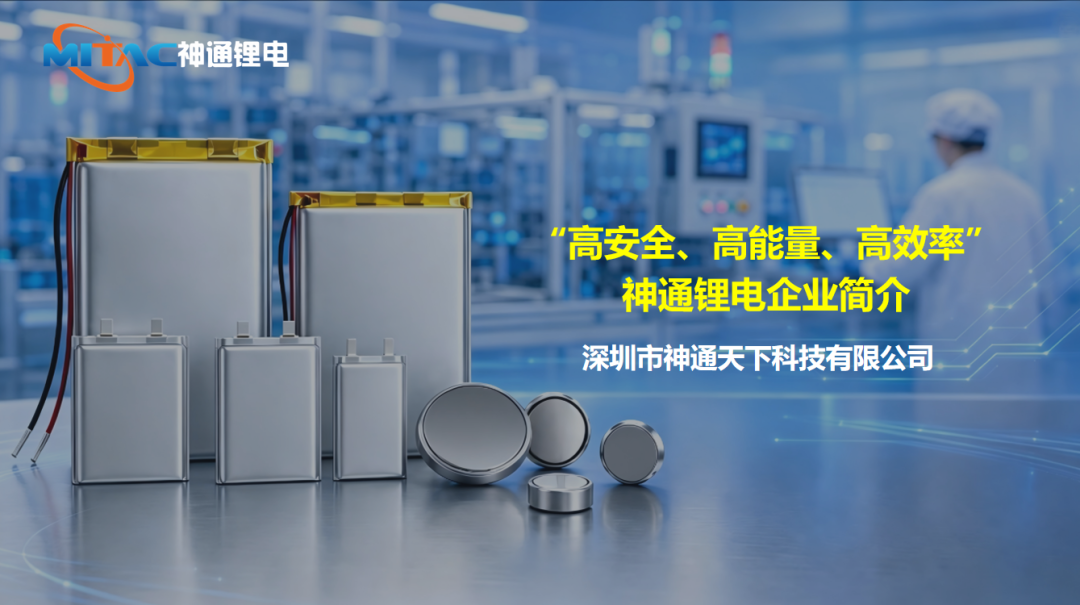
Specializing in energy storage for miniature wearable devices, Mitac Battery comprehensively optimizes cell core formulas, structural design and electrical parameters to address four core wearable pain points: high power leakage, heavy power draw, confined cavities and drastic power drop at low temperatures.
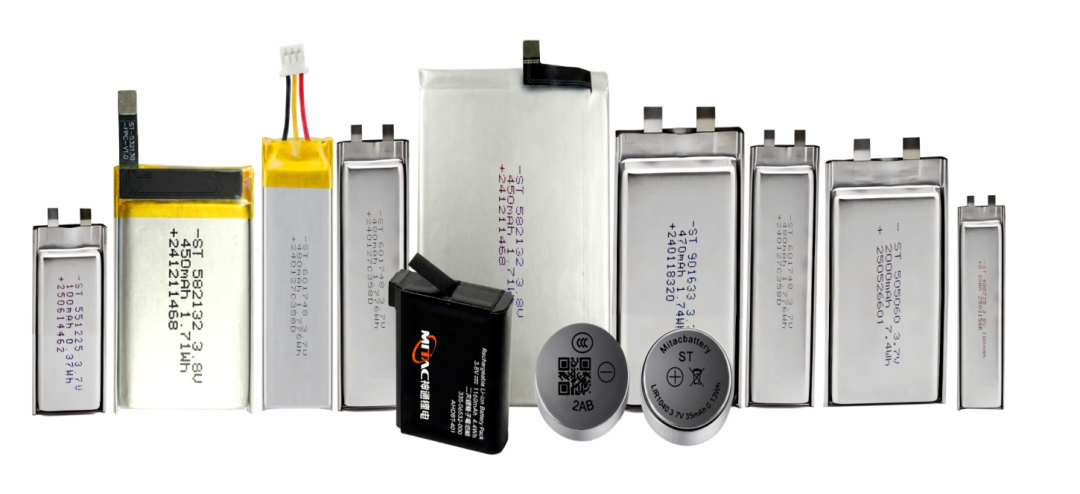
- Optimized internal cell structure to reduce internal resistanceAdopt ultra-thin copper foil + ceramic-coated separator technology, cutting alternating current internal resistance by 22% compared with conventional industry cells. This reduces self-heating and discharge power loss within cells, accommodating frequent pulse discharge and instantaneous high-power scenarios in wearables. It prevents wasted power under high-current discharge while lowering temperature spikes during fast charging, resolving thermal throttling in compact chassis.

- Upgraded electrolyte system to raise average operating voltageRevised high-voltage stable electrolyte formulas lift the average cell discharge platform voltage from the standard 3.8V to 3.87V. For identical discharge capacity, usable device power increases by approximately 7%. No PMIC parameter modifications are required, delivering modest battery life extensions with exceptional compatibility.
- Upgraded composite cathode materials to boost monomer energy densityDeploy a high-nickel ternary + silicon-carbon anode composite system, lifting cell monomer energy density 13% above conventional wearable batteries. With identical external dimensions, total battery storage capacity rises directly – ideal for ultra-thin chassis where cavity expansion is unfeasible.
- Full-range wide-temperature adaptation to curb low-temperature power collapseLow-temperature anti-degradation specialized electrolyte enables stable discharge across -20°C to 60°C, retaining ≥92% discharge capacity in cold environments. This effectively eliminates abrupt power loss for outdoor wearables in winter.
- Custom flexible special-shaped designs to maximize cavity space utilizationSupport ultra-thin cells as slim as 0.3mm and bending at any angle, enabling integrated customization to fit curved watch back covers, irregular headphone arms and ring-shaped smart band cavities. Cavity space utilization improves by over 13%, unlocking full energy storage potential within compact chassis.
(C) Mitac Battery Comprehensive Professional Strength to Resolve Wearable Battery Life Pain Points
Against four long-standing industry challenges – persistent battery life limitations, confined cavity adaptation, low mass production yields and low-temperature power drain – Mitac Battery leverages over a decade of expertise in miniature polymer lithium cells and national-level "Specialized, Refined, Unique, Innovative" enterprise credentials to unpack its professional advantages in wearable battery supply across five dimensions:
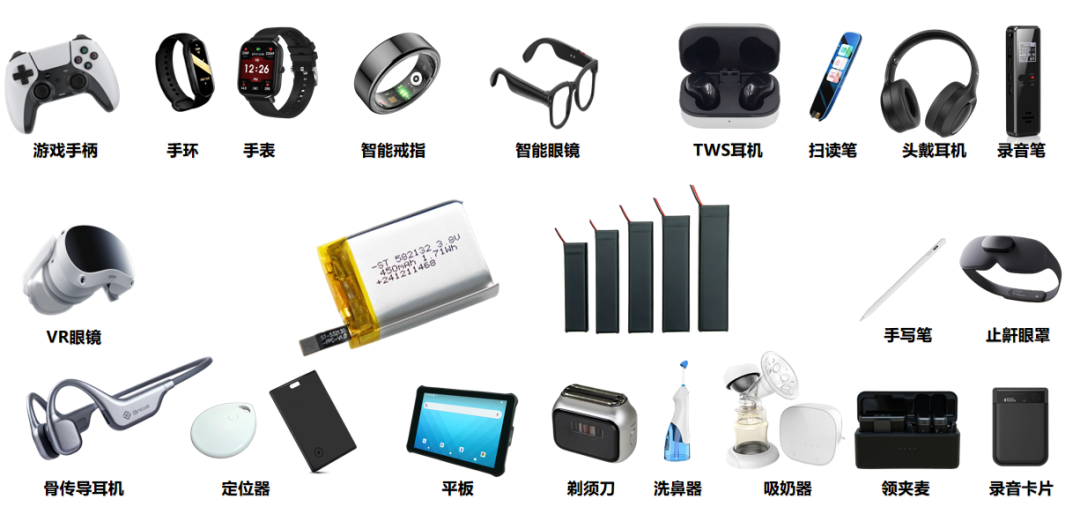
- Track-Focused Positioning: Specialized in micro lithium batteries, avoiding cross-industry generic cell mismatchesFounded in 2010, Mitac Battery has dedicated over a decade to integrated R&D and manufacturing of miniature polymer lithium cells and PACK assemblies, precisely targeting small-form-factor energy storage sub-sectors including smart wearables, audio equipment and personal medical care. All product development is tailored to unique wearable operating conditions: tiny cavities, volatile power draw, frequent pulse discharge and poor chassis heat dissipation. Underlying cell design aligns with hardware characteristics of smartwatches, bands, smart rings, AR glasses, TWS earbuds and more, eliminating native battery life flaws such as high internal resistance, unstable voltage and low space utilization plaguing generic cells deployed in wearables.
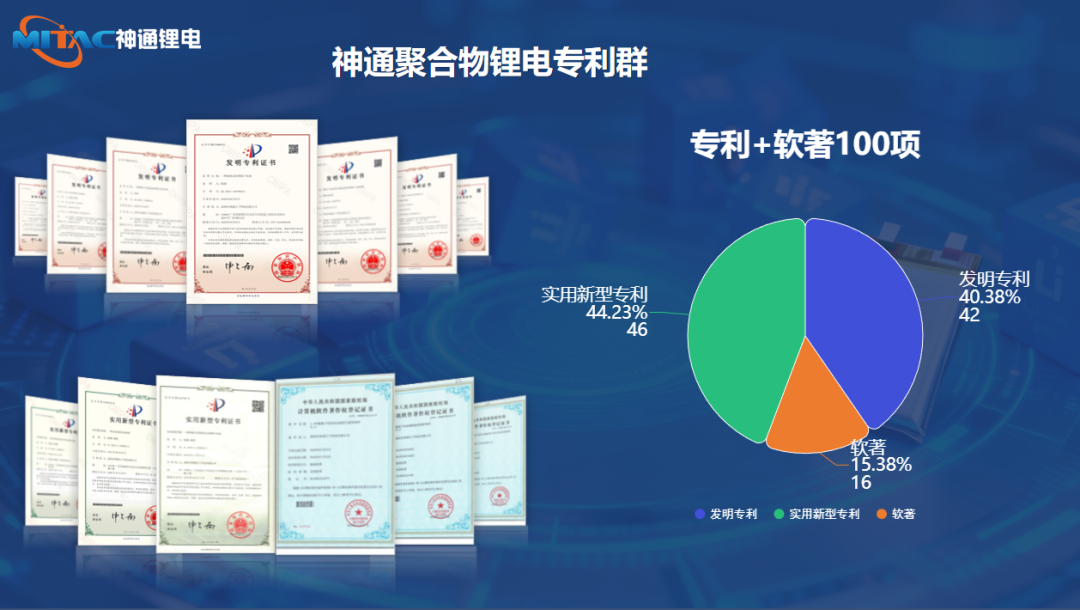
- Cutting-Edge R&D Capabilities: In-house research institute + hundreds of patents, full-chain material-to-cell technical innovationMitac operates an independent high-performance lithium battery research institute holding over 100 core lithium battery patents. It has built a complete closed-loop R&D workflow covering base materials, cell design, process development, testing verification and PACK integration, enabling targeted breakthroughs on core wearable battery life technical barriers.

- Full-Scale Production Capacity: Multi-base intelligent manufacturing supporting pre-project development and mass bulk deliveryWith headquarters in Shenzhen and five intelligent manufacturing bases spanning a total plant area of 100,000 sq.m., a professional team of 1,000 staff delivers a daily mass production capacity of 1 million cells. A newly built intelligent headquarters in Xiangyang further expands custom micro cell production capacity.
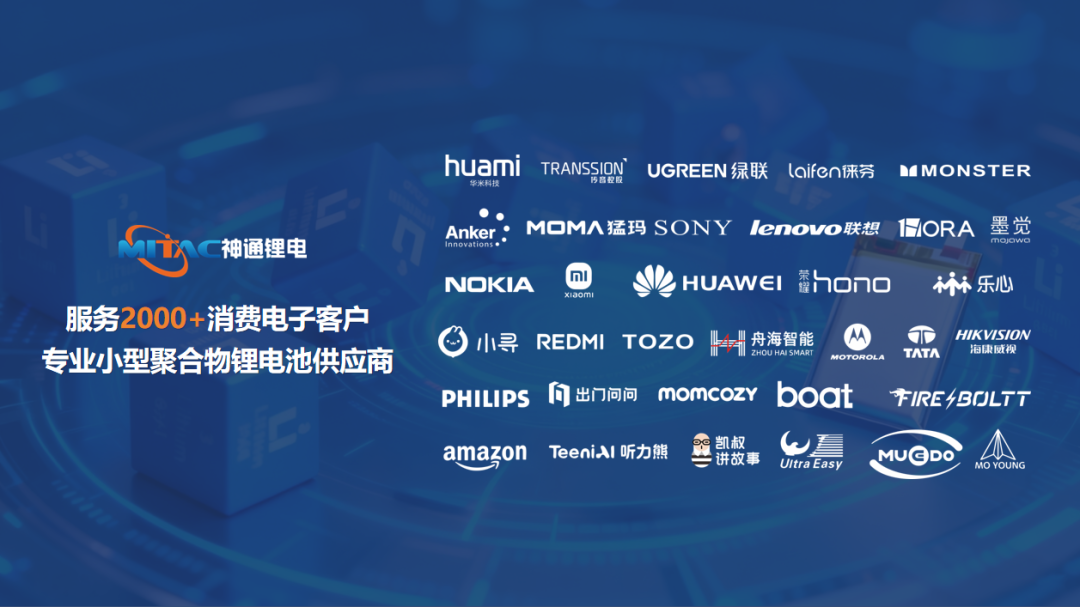
- Extensive Industry Implementation Experience: Serving 2,000+ clients with full-category wearable operating condition expertiseOver more than ten years, Mitac Battery has partnered with over 2,000 global consumer electronics brands, deeply supplying mainstream wearable manufacturers including Amazfit, Honor, Lenovo, Xiaomi, Philips, Monster, Decathlon and Imoo. Product coverage spans smartwatches, bands, smart rings, AR glasses and bone conduction earbuds, with in-depth familiarity of differentiated power consumption curves and structural pain points across all wearable product types.
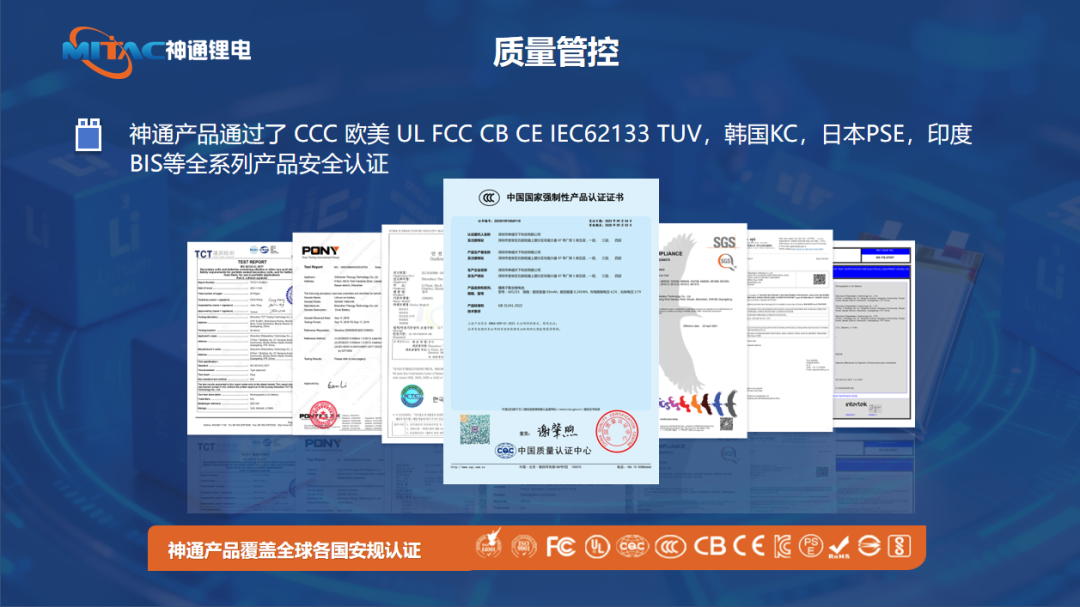
- Stringent Safety Compliance & Quality Control: Balancing battery life and safety for close-fitting wearable scenariosWearables are worn against the body around the clock, elevating battery safety to equal priority with battery life. Mitac Battery operates a PDCA closed-loop quality management system covering all production stages and holds strategic partnership status with SGS. Its products pass full global safety certifications including CCC, UL, CE, TUV, KC and UN38.3, with the enterprise participating in drafting two national lithium battery standards. All cells undergo full safety testing including extrusion, nail penetration, thermal chamber exposure and temperature cycling to address wearable-specific risks: heat buildup in confined spaces, daily bending/extrusion and prolonged skin contact. While optimizing battery life metrics, lowering internal resistance and boosting energy density, thermal runaway risks are strictly controlled to balance long endurance and close-fitting safety, addressing safety gaps common in most high-capacity industry batteries.
V. Three Future Development Trends of Smart Wearables
The hundred-billion-dollar track is merely a starting point. Continuous integration of AI, new materials and medical technology will drive three major industry trends:
- Deep AI Integration: Evolution from "Data Recorder" to "AI Health Assistant"Future wearables will function as dedicated 24/7 AI health stewards capable of interpreting data, analyzing physical status and delivering personalized advice, transforming smart wearables from mere "tools" to personal "health companions".
- Integrated Medical & Health Applications: Unlocking a New Hundred-Billion-Dollar Blue OceanFueled by policy dividends, medical-grade wearables will become a high-growth incremental track, closing the full medical loop of "monitoring – early warning – consultation – rehabilitation" to elevate the functional value and market potential of smart wearables to new heights.
- Form Factor Revolution: From "Wearable" to "Invisible Wearable"Breakthroughs in graphene flexible displays, micro sensors and other technologies will enable thinner, smaller, unobtrusive wearable devices, emerging as smart patches, invisible smart glasses and other form factors to deliver "imperceptible wearing experiences".
VI. Conclusion
The smart wearables industry maintains steady growth in 2026, sustained by three core growth drivers: policy incentives, hardware technology iteration and rising consumer health awareness. However, relentless miniaturization of chassis and surging power demand from edge AI computing have transformed battery life from a single user experience pain point into a structural bottleneck restricting full-industry product iteration.
Against this backdrop, miniature underlying polymer lithium batteries are no longer simple off-the-shelf procurement components. Instead, they represent a core hardware breakthrough for next-generation smart wearables to optimize core user experience, build differentiated hardware competitive barriers and capture market share in segmented tracks.
For the latest industry updates, follow Mitac Battery!Scan the QR code below for immediate inquiries.Contact Hotline (WeChat ID identical): +86 18145816867Official Website: https://www.mitacbattery.com/
Feel free to share your insights in the comments section!